Dental implants begin with the final result.
Implant planning works best when the restorative endpoint, anatomy and long-term maintenance strategy are considered before treatment begins.
Restore first. Place second.
A dental implant is not the final goal. The final goal is a restoration that is functional, maintainable and positioned appropriately for the patient’s anatomy and overall treatment plan.
That is why implant planning should begin by understanding the intended tooth position and restorative result. Three-dimensional imaging, clinical examination and digital records can then help evaluate bone, adjacent anatomy and the practical options for treatment.
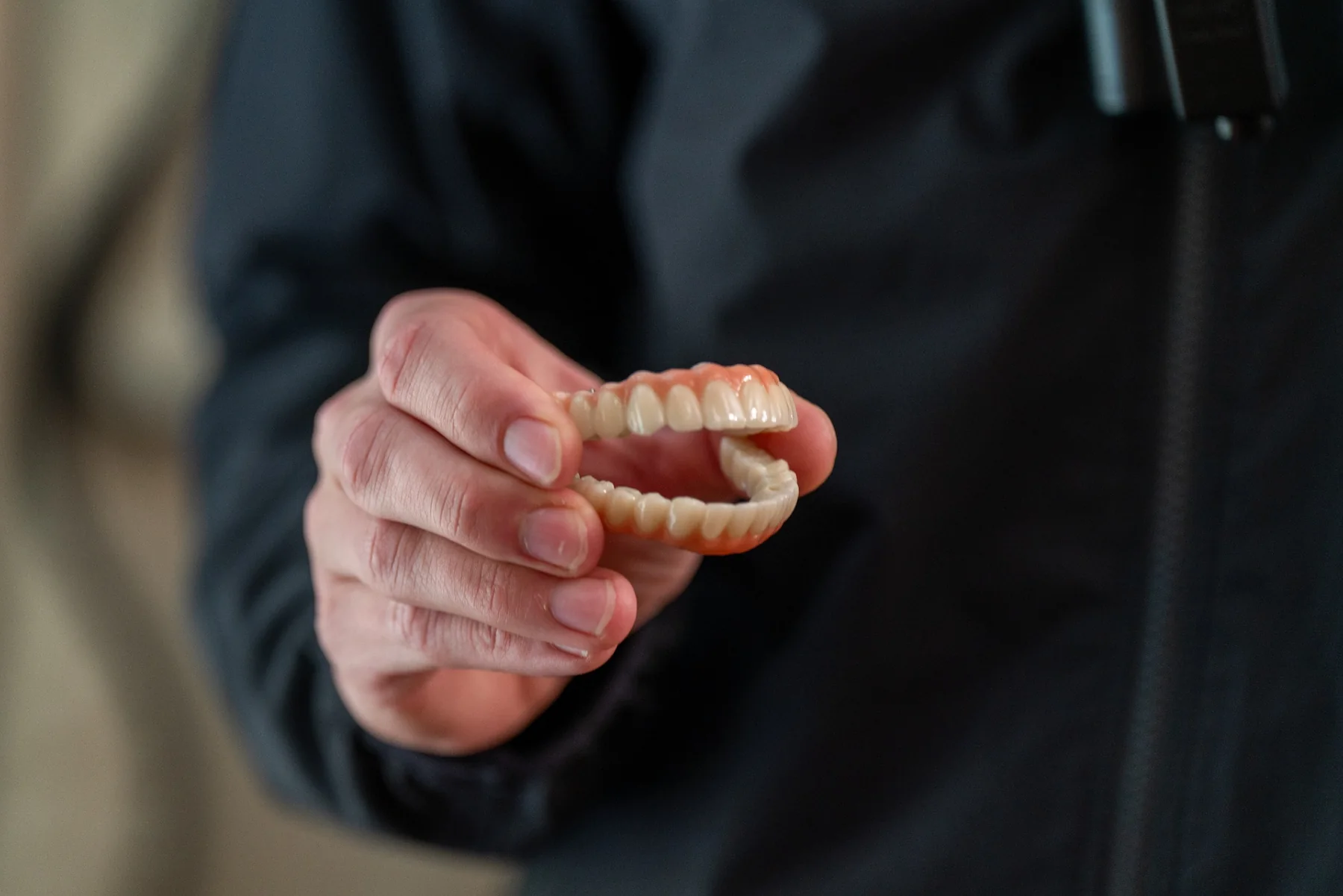
Three parts. One restoration.
A simplified explanation of a single implant restoration. Component designs and connections vary with the treatment plan.
- Crown
- The visible replacement tooth, shaped for appearance and function.
- Abutment
- The connector between the implant and the restoration.
- Implant
- The fixture placed in the jaw to support the restoration.
What goes into the decision.
Implant dentistry is a sequence of connected decisions. Each one influences the next.
- Clinical examination and medical/dental history.
- Three-dimensional imaging when indicated.
- Available bone and nearby anatomical structures.
- Soft tissue and restorative space.
- Tooth position, bite and aesthetic requirements.
- The number and position of implants required for the restorative concept.
- Maintenance, hygiene access and long-term follow-up.
Options should be understandable.
The same missing-tooth problem can sometimes be approached in more than one way. Implant treatment may be compared with conventional restorative options, removable prostheses or a staged plan depending on the clinical situation.
The important part is not simply naming the options. It is explaining how they differ in surgery, time, maintenance, cost, complexity and expected function so the patient can make an informed decision.
Is every missing tooth replaced with an implant?
No. The appropriate number and position of implants depends on the restorative plan, anatomy and the number of teeth being replaced.
Why is 3D imaging used?
When clinically indicated, three-dimensional imaging can help evaluate bone and nearby anatomical structures and can support implant positioning and treatment planning.
Why plan the restoration before the implant?
The position and design of the final restoration influence where an implant ideally needs to be placed. Working backward from the restorative goal helps connect the surgical and restorative phases.