Dr. Caleb Martin
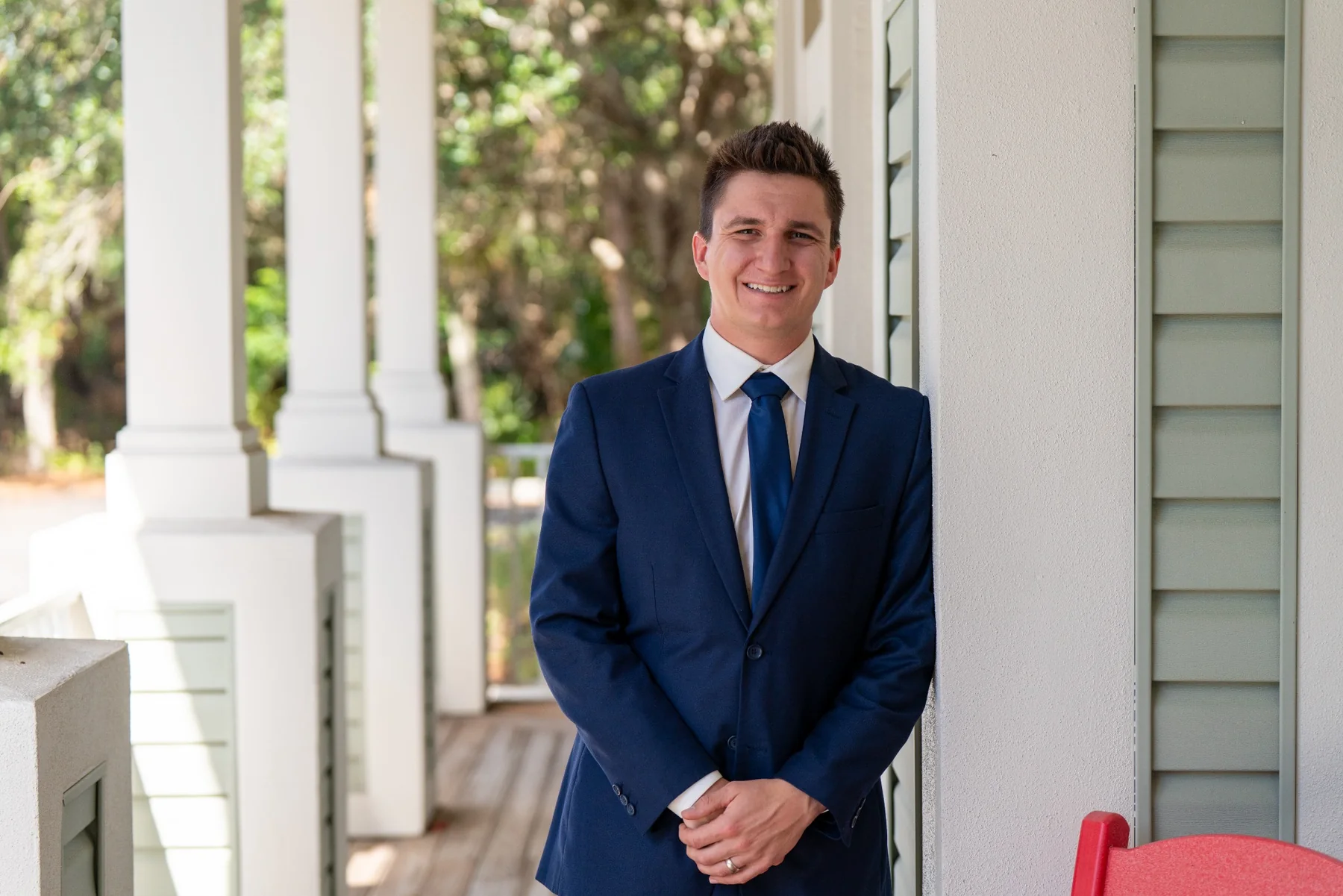
Dr. Caleb Martin approaches dentistry the way he approaches everything else that matters to him: take the system apart, understand how it actually works, then put it back together so it lasts.
A foundation in science.
He earned his Doctor of Dental Medicine from the LECOM School of Dental Medicine in Bradenton, a program built around early patient care and a whole-person view of health. Before that he completed a Bachelor of Science in Biology with a minor in Chemistry at Slippery Rock University. Those years of science training still show. He is a certified Invisalign provider and has completed advanced training in IV sedation and airway management, along with ACLS. His surgical continuing education includes single-tooth and full-arch implant placement and restoration, as well as sinus lifting. He is a member of the Silver King Study Club in Sarasota, where he trains alongside some of the most respected dentists in the field. In the years since completing his formal education, he has had the privilege of traveling across the country to learn from dentists at the forefront of the profession.
Away from the chair
Dr. Martin completed Ironman Florida in 2023 in Panama City Beach — a 2.4-mile swim, 112-mile bike, and 26.2-mile marathon in a single day.
He has also finished ultra-marathons, including the Grand Canyon Rim-to-Rim-to-Rim: South Rim to North Rim and back again, roughly 40–48 miles with more than 20,000 feet of elevation change.
He continues to race triathlon and the marathon. Outside of racing, he rides: road cycling, gran fondo events, and high-mountain climbing on the road bike.
At home, he is a husband and father. He and his wife and their children live in Florida and enjoy the state’s warm weather year-round.
The why behind the care.
Patients who work with him tend to notice that he explains the “why,” not just the “what.” He likes cases that reward careful planning—aligners when they fit, implants when they are the right long-term answer, and sedation when comfort and safety need extra attention. He treats the mouth as part of a larger system rather than a collection of isolated teeth. The goal is straightforward: healthy function, a smile that holds up, and care that feels considered rather than rushed.
Excellence you can feel. Decisions you can follow.
High-quality patient care is the work. Technology earns a place here only when it makes that care more precise, more comfortable, or easier to understand. I plan from where you are to where you want to be: your goals, your concerns, your health, and a result that should last for years. Imaging can sharpen the picture. It does not make the treatment decision.
Excellence is not a claim on a wall. It is a restoration that functions, a consult without hidden steps, materials chosen for the body rather than the brochure, and a visit paced so you can stay calm and informed. Innovation is how I keep getting better at both.
A roadmap to your vision.
Listen.
Excellence starts before an image is taken. I want the destination in your words: function, comfort, appearance, time, and what you are not willing to compromise. Continuing education keeps the clinical options current. Listening keeps those options pointed at the right person.
Diagnose.
Precision is a duty, not a style. Examination, CBCT when it adds anatomy a flat film cannot show, and digital records are used to map bone, teeth, bite, and risk. AI and imaging software can help organize what we see. They do not replace a diagnosis. That remains a clinical act.
Plan.
A digital workflow—scans, models, guided surgical thinking, and restorative design—lets the surgical step and the final tooth meet on the same page. I believe technology earns that place only when it sharpens the plan and makes the decision easier to understand. If it does not, it stays off the table.
Treat.
Training has to show up in the chair: implant and full-arch protocols, osseodensification and sinus work when the site demands it, IV sedation when calm care is part of doing the work well. Dedication to excellence here means preparation, measured execution, and a known restorative endpoint before treatment begins.
Follow through.
The work is not finished when the appointment is. A result should function, be maintainable, and still make sense years later. Follow-through is review, adjustment, and the same standard that started the plan: high-quality care you can feel, and decisions you can still follow after you leave.