Straighten with a plan you can see.
Clear aligner therapy—including Invisalign®—starts with digital records, honest candidacy, and a sequence of movements you understand before the first tray.
Trays are the delivery. Planning is the treatment.
Clear aligners are custom, nearly invisible trays that apply controlled force to move teeth over time. Patients across Port Charlotte and Charlotte County often ask about them when they want a straighter smile without fixed braces—or when bite and spacing issues are affecting how teeth wear or clean.
I am a certified Invisalign provider. I use the brand name carefully: Invisalign® is one clear aligner system among a broader category of clear aligner therapy. The consultation is about whether removable trays can achieve your goals safely and predictably—not about promising a brand.
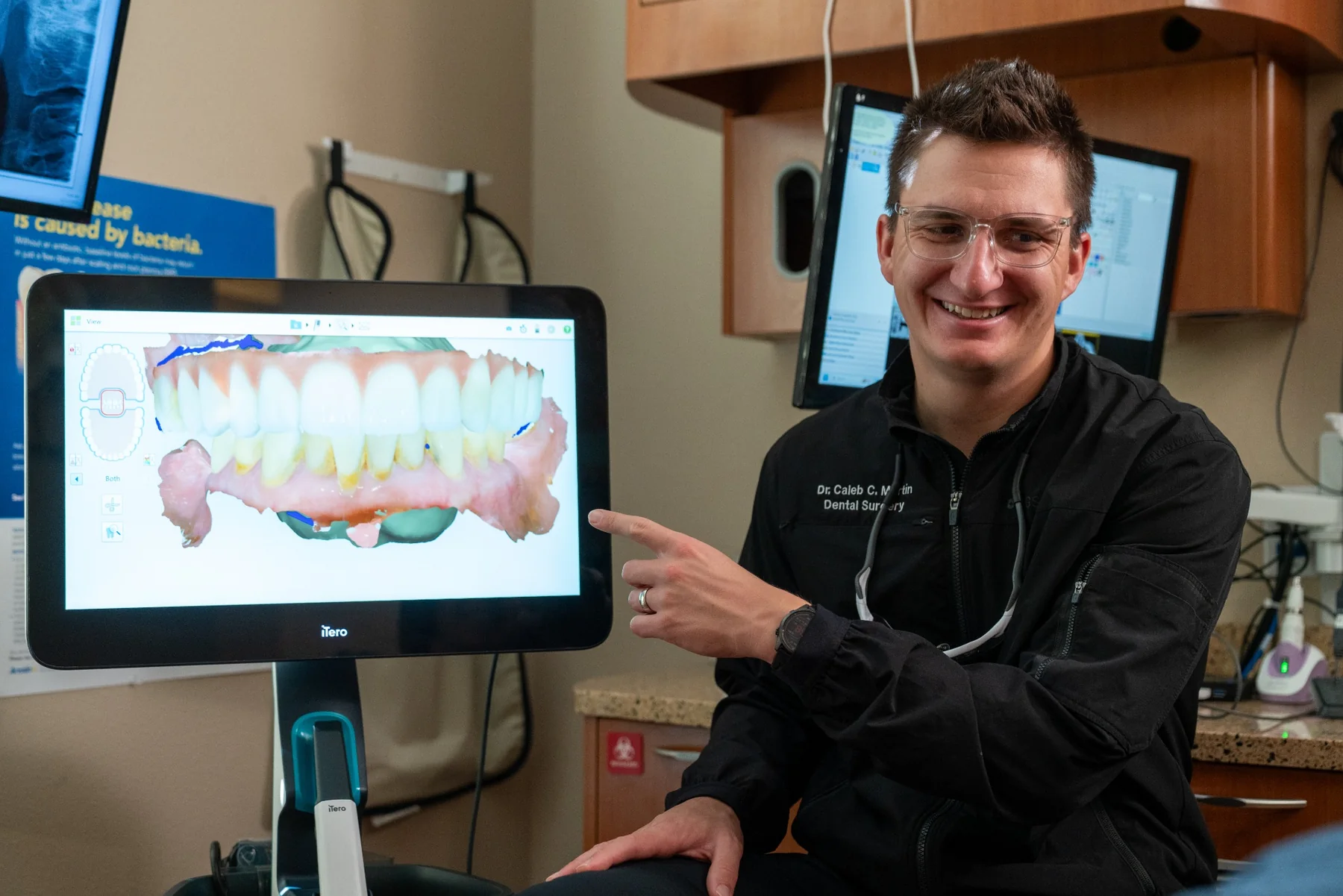
Aligners work best when the destination is clear: which teeth need to move, how the bite should finish, and what you are willing to commit to in daily wear. Digital scans (including iTero-style intraoral scanning when used) help build that plan. Photographs, a clinical exam, and sometimes radiographs complete the picture.
Good candidates—and honest limits.
Clear aligners can address mild to moderate crowding, spacing, and many bite concerns in adults and teens who will wear trays as directed. People often seek treatment because they want a more even smile, better hygiene access between crowded teeth, or a plan that fits work and social life in Southwest Florida.
They are not automatic for every case. Significant skeletal discrepancies, certain complex bite problems, untreated gum disease, uncontrolled decay, or an inability to wear trays most of the day may point toward another approach—or toward treating health issues first. Prior crowns, bridges, and implants change how teeth can move; that is part of the planning conversation, not a surprise mid-treatment.
If anxiety makes longer visits difficult, we can also talk about how appointments are paced—and, when appropriate, how IV sedation fits other procedures. Aligners themselves are typically worn at home between shorter check-ins.
Scan. Plan. Wear. Refine.
A simplified view of clear aligner therapy. Exact steps vary with the clinical plan.
- Records
- Exam, photos, and a digital scan map tooth positions and the bite.
- Digital plan
- Proposed movements are reviewed so you can see the intended path and endpoint.
- Trays & retention
- You wear a sequence of aligners; retainers protect the finished result.
From consult to retainers.
At Paradise Dental in Port Charlotte, clear aligner care typically follows a sequence:
- Consultation and exam. We discuss goals, medical and dental history, and what you have already tried.
- Digital planning. Intraoral scans capture tooth geometry. When indicated, imaging helps evaluate roots, bone, and structures that affect movement. The proposed sequence is reviewed with you before trays are ordered.
- Attachments and IPR when needed. Small tooth-colored attachments or carefully planned interproximal reduction may be part of creating space or control. These are explained in advance when they are in the plan.
- Wear and check-ins. Trays are usually worn about 20–22 hours per day, removed for meals and cleaning. Progress visits confirm tracking; refinements may be added if teeth need extra detail.
- Retention. After active movement, retainers help hold the result. Nighttime wear long-term is common.
Digital planning connects to the same mindset I use for dental implants: decide the endpoint first, then choose the tools that get there predictably.
Responsible expectations.
Tooth movement is a biological process. Temporary discomfort with new trays, slight speech changes early on, and the need for excellent hygiene around attachments are common. Less often, trays may not track as planned, requiring refinements or a change in approach. Root shortening, bite changes, or gum issues can occur with orthodontic movement of any kind; monitoring and candidacy screening reduce—but do not eliminate—those risks.
Aftercare is practical: clean trays as instructed, brush and floss thoroughly (aligners make hygiene easier than braces when you remove them), keep follow-up visits, and wear retainers as prescribed. Lost or cracked trays should be reported rather than skipping ahead in the series without guidance.
If you live in Port Charlotte, Punta Gorda, or nearby Charlotte County communities, ask about visit timing that fits your schedule. Remote check-ins are not a substitute for clinical judgment when something feels off—call the practice.
Questions worth asking.
Am I a candidate for clear aligners?
Many mild to moderate alignment and spacing concerns can be addressed with clear aligners. Crowding, bite relationships, prior restorations, gum health, and how consistently you can wear trays all matter. A clinical exam and digital records determine whether aligners are appropriate or whether another approach would serve you better.
What is the difference between clear aligners and Invisalign®?
Clear aligners is the treatment category. Invisalign® is one well-known system; I am a certified Invisalign provider. The consultation covers whether that system—or another option—fits your goals and anatomy.
How long does clear aligner treatment take?
Length depends on complexity, daily wear, and possible refinements. Some plans finish in months; others take longer. You receive an estimated timeline after the digital plan is reviewed.
Do clear aligners hurt?
Pressure or soreness for a day or two after a new tray is common. Sharp pain, persistent sores, or trays that will not seat should be discussed with the practice promptly.
What happens after treatment ends?
Teeth can drift after movement. Retainers—often worn at night long-term—are part of protecting the result and are planned before treatment finishes.
Further reading: ADA: orthodontics.